Knowledge base/Training basics
Does cardio kill your gains? Lifting and cardio in the same week
In short
No, not for most people. A 2022 meta-analysis of 43 studies found that adding cardio to weight training did not reduce muscle growth or maximal strength. It did slow gains in explosive strength, mostly when both were done in the same session. If you do both on one day, lift first, and keep hard cardio away from heavy leg days where you can.
 Cody de LeeuwLast checked 29 October 2026 · 6 min read
What the research says
The worry has a name: the interference effect. The idea is that endurance training sends signals that work against muscle growth. Two large reviews looked at it:
- A 2022 meta-analysis of 43 studies compared strength training alone with strength training plus cardio. Muscle size and maximal strength came out the same. Explosive strength, such as jumping, did improve less.1
- A 2012 meta-analysis of 21 studies found smaller gains in muscle and strength when cardio was added, mostly with running. The more often and the longer people did cardio, the bigger the loss.2
So for muscle and strength, a sensible amount of cardio is unlikely to hold you back. If jumping and sprinting matter for your sport, be more careful with how you combine them.
Running or cycling?
In the 2012 review, running alongside weight training lowered gains in muscle and strength, while cycling did not.2 A likely reason is that running pounds the legs harder. The 2022 review found no clear difference between the two.1
If your legs feel beaten up, swapping one run for a ride, a row or a swim is an easy change to try.
Which comes first?
If you do both in one session, lift first. A meta-analysis of studies that tested both orders found that lifting before cardio gave about 4 kg more on lower-body strength tests. The order made no difference to aerobic fitness.3
Better still, split them. Explosive strength suffered most when both happened in the same session, and not when sessions were at least 3 hours apart.1
An example week
A week with three lifting sessions, two runs and a game of padel could look like this:
| Day | Session | Why here |
|---|---|---|
| Monday | Lower body | Fresh legs for the heaviest work |
| Tuesday | Easy run | Easy pace, so legs recover |
| Wednesday | Upper body | Legs rest |
| Thursday | Padel | Two days before the next leg day |
| Friday | Full body | Lighter lower-body work |
| Saturday | Long run or hard intervals | Far from Monday’s leg day |
| Sunday | Rest |
The idea: put your hardest leg work and your hardest cardio on different days, with a day in between where you can.
Eat for both
Cardio burns energy. If you add runs or matches to your week but eat the same, you may slowly fall short. That can look like interference: lifts stall and recovery takes longer. If your lifts stall after adding cardio, check whether your body weight has dropped before you cut the cardio.
Moderate evidence
Two meta-analyses ten years apart disagree in part. The 2022 analysis of 43 studies finds no effect on muscle size or maximal strength. The 2012 analysis of 21 studies found some loss, linked to running and to longer, more frequent cardio. How we rate evidence

How Mitta does it
Lifting and sports in one week.
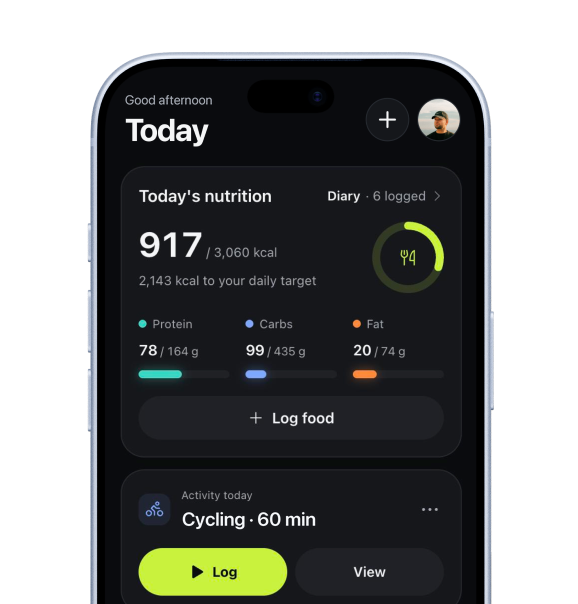
Mitta plans your strength training and lets you log cardio and nearly 50 sports next to it, so your whole week is in one place.
- Nearly 50 sportsLog a run, a ride or a padel match with the duration, and for some sports the distance. Logging cardio and sports is free.
- From your watchWith Pro, workouts from Apple Health land in your week by themselves.
- A lighter day when you need itBefore you train, a short check-in asks about sleep, energy and soreness. After a short night with low energy, or with heavy soreness, Mitta suggests 1 set less per exercise and 1 rep less than the target. You decide.
Plan your lifting around the rest of your week.
Mitta puts your strength training, cardio and sports in one week. Free to start, in the web app for invited testers.
Questions about
Does cardio kill your gains? Lifting and cardio in the same week
Should I lift or do cardio first?
If you do both in one session and strength is your goal, lift first. Studies found more lower-body strength gain that way, and no difference in aerobic fitness.
Will running make me lose muscle?
Not if you keep lifting and eat enough. The latest meta-analysis found no loss of muscle growth when cardio was added to strength training.
How much cardio is too much?
There is no fixed cut-off. Older research linked more frequent and longer cardio to smaller gains. If your lifts stall and recovery gets worse after adding cardio, cut back or eat more first.
Is cycling better than running for lifters?
It may be. One meta-analysis found that running reduced gains in muscle and strength while cycling did not. A newer one found no clear difference.
How far apart should cardio and lifting be?
Where you can, on different days or at least a few hours apart. In the 2022 meta-analysis, explosive strength suffered when both were done in one session, and not when they were 3 or more hours apart.
Sources
- Schumann M, Feuerbacher JF, Sünkeler M, Freitag N, Rønnestad BR, Doma K, Lundberg TR. Compatibility of concurrent aerobic and strength training for skeletal muscle size and function: an updated systematic review and meta-analysis. Sports Medicine, 2022; 52(3): 601–612. doi.org/10.1007/s40279-021-01587-7
- Wilson JM, Marin PJ, Rhea MR, Wilson SM, Loenneke JP, Anderson JC. Concurrent training: a meta-analysis examining interference of aerobic and resistance exercises. Journal of Strength and Conditioning Research, 2012; 26(8): 2293–2307. doi.org/10.1519/JSC.0b013e31823a3e2d
- Murlasits Z, Kneffel Z, Thalib L. The physiological effects of concurrent strength and endurance training sequence: a systematic review and meta-analysis. Journal of Sports Sciences, 2018; 36(11): 1212–1219. doi.org/10.1080/02640414.2017.1364405
Written by Cody de Leeuw. First published 29 October 2026, last checked 29 October 2026. This article is general information, not medical advice. Spotted a mistake? Tell me